Skip to content

Looking to "GIV" a Gown to a loved one? Click here to find the perfect GIV Gown for their healthcare journey.

The gown comparison

What's the difference?

The traditional patient gown was built to make the body accessible. GIV Gowns were designed to give clinical teams the access they need without treating coverage, comfort, dignity, or the patient experience as optional. Put them side by side and the difference is difficult to ignore.

We did not build a more expensive version of the same gown, we created a new category.

The inherited standard

Traditional Gown

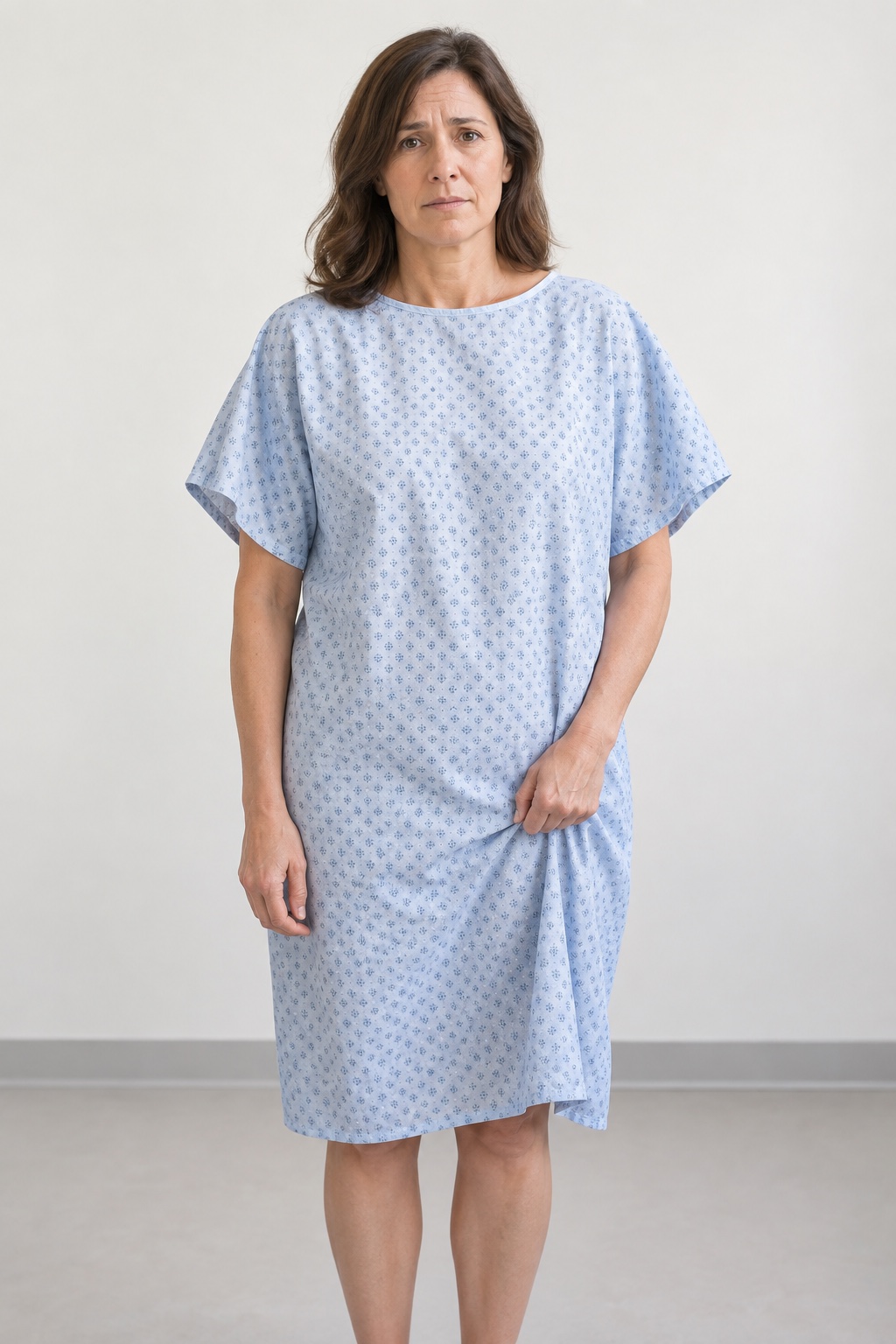
Front view of a woman adjusting a thin traditional patient gown
Front view
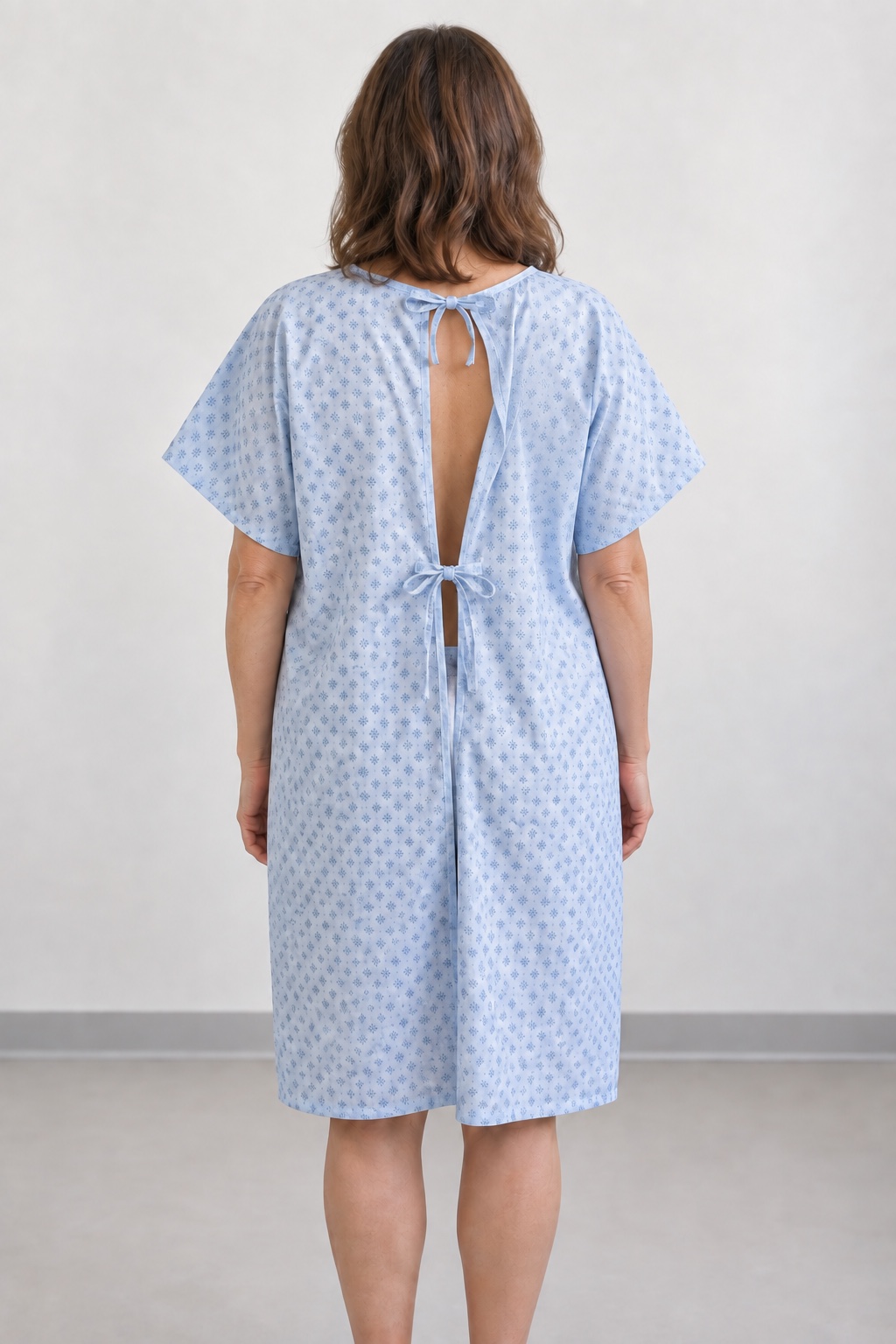
Back view showing the ties and open construction of a traditional patient gown
Back view

A basic covering that often asks the patient and care team to work around everything it does not do.

Built to establish a new standard

Patient & Clinical Experience Attire

GIV Gowns

Front view of the GIV Classic patient gown
Front view
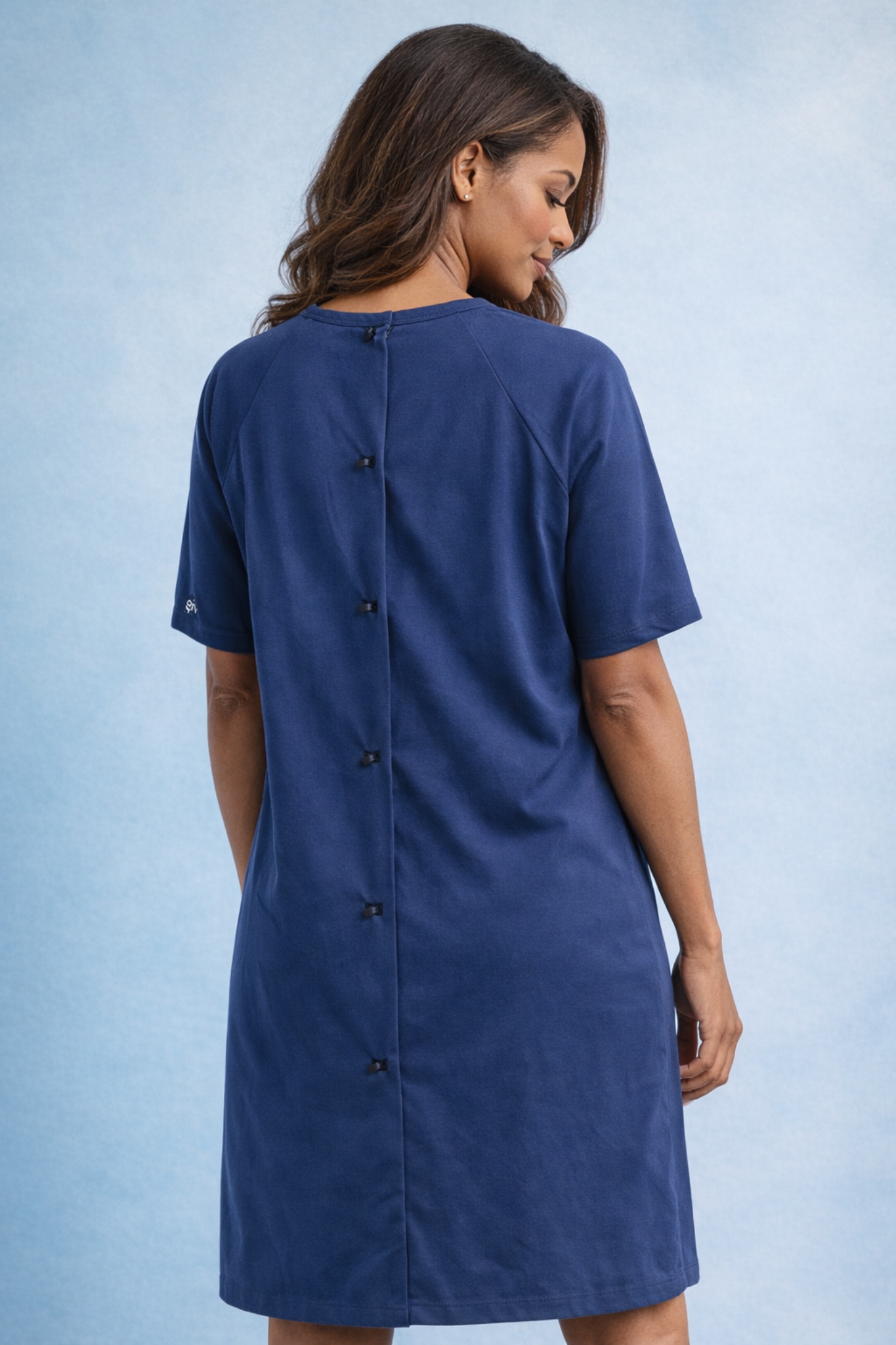
Back view of a woman wearing a navy GIV Gown
Back view

Built for Patients. Designed by Providers. Driven by Purpose.

The full comparison

One Inherited Standard. One Purpose-Built System.

Traditional-gown results are shown as Yes, No, or Varies. The GIV logo and “Applies” label show where a feature applies to GIV Gowns.

59 statements comparing traditional patient gowns with GIV Gowns
Qualifier or statementTraditional GownGIV Gowns
What a patient gown should do
Serves as a partial coveringTraditional GownYesGIV GownsApplies
Covers the front and back of the bodyTraditional GownNoGIV GownsApplies
Maintains coverage while sitting, standing, and walkingTraditional GownNoGIV GownsApplies
Uses secure, intentional closuresTraditional GownNoGIV GownsApplies
Is designed around real human bodies rather than a one-design-fits-everything approachTraditional GownNoGIV GownsApplies
Provides soft, breathable, flexible fabricTraditional GownNoGIV GownsApplies
Offers multiple sizes and color choicesTraditional GownNoGIV GownsApplies
Is designed for repeated useTraditional GownVariesGIV GownsApplies
Can be personally owned, washed, packed, and brought back to future appointmentsTraditional GownNoGIV GownsApplies
Built for patients
Designed with patient dignity in mindTraditional GownNoGIV GownsApplies
Helps the wearer remain covered without holding the gown closedTraditional GownNoGIV GownsApplies
Gives the wearer a clear, intuitive way to put it onTraditional GownNoGIV GownsApplies
Offers front-closing options for people who cannot comfortably reach behind themselvesTraditional GownNoGIV GownsApplies
Includes closure choices that can support different mobility, dexterity, and care needsTraditional GownNoGIV GownsApplies
Supports freedom of movement without becoming another thing the patient has to manageTraditional GownNoGIV GownsApplies
Can feel familiar across repeated appointments, treatments, or recoveryTraditional GownNoGIV GownsApplies
Can move with the person from appointment to recovery and home, depending on the selected designTraditional GownNoGIV GownsApplies
Makes a useful, meaningful gift for someone facing a healthcare challengeTraditional GownNoGIV GownsApplies
Designed for providers and clinical care
Designed by medical providersTraditional GownVariesGIV GownsApplies
Built around the needs of both the person wearing it and the person providing careTraditional GownNoGIV GownsApplies
Provides targeted, segmental access to the area being examined or treatedTraditional GownNoGIV GownsApplies
Helps keep the rest of the body covered while one area is accessedTraditional GownNoGIV GownsApplies
Supports efficient exams, assessments, imaging, monitoring, or treatmentTraditional GownNoGIV GownsApplies
Offers product designs for different specialties and areas of clinical accessTraditional GownNoGIV GownsApplies
Can reduce reliance on removing the entire garment for accessTraditional GownNoGIV GownsApplies
Can reduce reliance on workarounds such as an extra sheet or second gownTraditional GownNoGIV GownsApplies
Provides snap options for settings where magnetic closures are not appropriateTraditional GownNoGIV GownsApplies
Includes options created for mobility-focused, orthopedic, breast, chest, abdominal, front-body, and general access needsTraditional GownNoGIV GownsApplies
Made for more than one kind of patient
Purpose-built options for premature infants and newbornsTraditional GownNoGIV GownsApplies
Purpose-built pediatric sizing and designsTraditional GownNoGIV GownsApplies
Pediatric HERO options designed to help children feel brave and like themselvesTraditional GownNoGIV GownsApplies
Options for adults with limited reach, mobility, vision, or dexterityTraditional GownNoGIV GownsApplies
Options for recurring care, screenings, infusions, recovery, rehabilitation, postpartum care, and longer staysTraditional GownNoGIV GownsApplies
One broad design expected to serve nearly every specialty, body, and clinical momentTraditional GownYesGIV GownsNo
Built for organizations and a wider purpose
Helps a healthcare organization visibly differentiate its patient experienceTraditional GownNoGIV GownsApplies
Available with facility branding or customization optionsTraditional GownNoGIV GownsApplies
Designed as part of a premium, reusable patient-attire systemTraditional GownNoGIV GownsApplies
A purchase contributes to the GIV Back InitiativeTraditional GownNoGIV GownsApplies
Extends impact into access to care, disaster response, safe shelter, education, and economic opportunityTraditional GownNoGIV GownsApplies
An honest comparison on price and categoryThe traditional gown usually costs less upfront because it contains less design, less material, fewer components, and far less functionality.
Usually offers the lowest upfront price per gownTraditional GownYesGIV GownsNo
Was built to function as a low-cost, broad-use coveringTraditional GownYesGIV GownsNo
Represents years of product development and refinementTraditional GownNoGIV GownsApplies
Incorporates input from medical providers across multiple clinical specialtiesTraditional GownNoGIV GownsApplies
Contains proprietary design and intellectual propertyTraditional GownNoGIV GownsApplies
Uses more components to provide targeted access, secure closure, coverage, and functionTraditional GownNoGIV GownsApplies
Uses premium, flexible, washable fabric selected for comfort and repeated useTraditional GownNoGIV GownsApplies
Includes purpose-built products for different patients, specialties, and clinical momentsTraditional GownNoGIV GownsApplies
Should be evaluated as Patient & Clinical Experience Attire rather than a commodity coveringTraditional GownNoGIV GownsApplies
Was built with the intention of replacing the traditional patient gownTraditional GownNoGIV GownsApplies
What the traditional gown does remarkably well
Leaves the back openTraditional GownYesGIV GownsNo
Can leave the wearer feeling overexposedTraditional GownYesGIV GownsNo
Requires the wearer to hold, pull, or adjust it to maintain coverageTraditional GownYesGIV GownsNo
Uses ties many people cannot see or comfortably reachTraditional GownYesGIV GownsNo
Creates confusion about which way it goes onTraditional GownYesGIV GownsNo
Can bunch, twist, gap, tear, or lose coverage when the patient movesTraditional GownYesGIV GownsNo
Comes in a paper version that can rip when the wearer movesTraditional GownYesGIV GownsNo
Makes “one size fits most” do an extraordinary amount of workTraditional GownYesGIV GownsNo
Has not been meaningfully innovated in over a hundred yearsTraditional GownYesGIV GownsNo
Reminds the patient that “this is how we have always done it”Traditional GownYesGIV GownsNo
The traditional gown is familiar. Familiar and well-designed are not the same thing.

“Traditional gown” refers to common paper or cotton patient gowns with open-back construction, ties, and limited specialty-specific design. Specific products vary. GIV Gowns features vary by product; review the individual product page and follow the guidance of the treating clinical team regarding sterility, imaging, monitoring, infection-control, and procedural requirements.

The price is different because the product is different

A Commodity Covering and a Purpose-Built Clinical Tool Are Not a Direct Comparison.

GIV Gowns are more expensive than traditional paper or cotton gowns. That is true, and we should say it plainly. They are also the product of years of development, proprietary design, better materials, more components, extensive refinement, and input from medical providers across multiple clinical specialties who told us what they needed a gown to do in order to better support both their work and the person wearing it.

The traditional gown was built to provide broad access to the body at the lowest practical cost. GIV Gowns were built around targeted access, meaningful coverage, movement, different bodies, different ages, different specialties, and different moments in care. That additional function comes at a cost because it takes more thought, more material, more construction, and more precision to produce.

We are not asking healthcare organizations or patients to view GIV Gowns as a more expensive version of the same thing. GIV Gowns define a different category: Patient & Clinical Experience Attire. They should be evaluated and budgeted based on what they are designed to contribute to the patient experience, the provider experience, clinical workflow, organizational differentiation, repeated use, and the wider purpose supported through the GIV Back Initiative. When patient satisfaction, provider satisfaction, the emotional and psychological experience of care, staff workflow, and total cost of ownership are considered alongside purchase price, we believe the additional investment is more than justified.

Do we intend for GIV Gowns to replace traditional patient gowns? Very much so. A standard does not deserve to remain the standard merely because it has been inexpensive and familiar for a very long time.

Traditional Gown

Lowest upfront cost. Minimum function.

GIV Gowns

Greater investment. An entirely different level of design, function, and purpose.

A covered wagon and an unbranded modern SUV traveling through the same mountain landscape

Traditional Gown

Covered Wagon

Built to perform one basic function.

GIV Gowns

Fully Equipped SUV

Engineered around the journey, the people, and the conditions ahead.

A covered wagon and a fully equipped SUV can both be described as transportation. That does not make them comparable. One performs the minimum function available in its era. The other reflects generations of engineering, better materials, safety, versatility, specialized tools, and preparation for the conditions ahead.

That is the clearest way to understand the difference between the traditional patient gown and GIV Gowns. Both can be called gowns. Only one was developed as a complete system around modern patients, modern providers, and modern care.

The problem is documented

Patients Have Been Telling Healthcare What the Gown Feels Like.

  • 72%felt exposed
  • 67%reported poor fit
  • 61%struggled to put the gown on
  • 60%felt self-conscious
  • 57%felt uncomfortable

These findings came from a 928-person survey of the traditional patient-gown experience. They describe documented problems with exposure, fit, usability, and comfort. The research does not evaluate GIV Gowns specifically; GIV Gowns were designed in response to the same problems these studies continue to identify.

Other published research referenced on our Healthcare Facilities page has evaluated redesigned patient attire for coverage, donning and removal, mobility, clinical access, patient preference, provider preference, privacy, and dehumanization. Those studies did not test GIV Gowns.

For Healthcare Leaders, the Comparison Goes Well Beyond the Gown.

Review the research, total-cost-of-ownership framework, reusable and disposable gown calculator, operational considerations, and facility adoption case on our Healthcare Facilities page.

Value that does not appear on the unit-price line

The Gown Touches More Than the Supply Budget.

A purchasing comparison that stops at price per gown leaves out the people using it and much of what the attire system affects. The better evaluation includes the experience of the patient, the experience of the medical provider and clinical staff, the workarounds created by the current gown, and the total cost of keeping that system in place.

  • Patient experience

    What the Patient Feels and Reports

    Coverage, comfort, fit, ease of dressing, self-consciousness, dignity, confidence, sense of control, and preference should be measured. These are not ornamental benefits. They are part of the environment in which a person is being asked to communicate, participate, consent, and receive care.

    How to evaluate: Evaluate through patient-satisfaction surveys, garment preference, reported comfort, perceived coverage, ease of use, and willingness to choose the attire again.

  • Provider and staff experience

    What the Care Team Has to Work Around

    Clinical access, ease of care, gown orientation, changing time, removal and replacement, additional sheets or second gowns, interrupted workflow, and the time spent helping a patient maintain coverage all belong in the comparison.

    How to evaluate: Evaluate through provider and staff satisfaction, access ratings, setup and change time, reported workarounds, and preference over the traditional gown.

  • Emotional and psychological experience

    What Changes Before Care Even Begins

    Published research has connected traditional patient attire with exposure, self-consciousness, discomfort, poor fit, difficulty dressing, and dehumanization. GIV Gowns were designed in response to those documented failures, with coverage, comfort, familiarity, choice, and control intentionally built into the experience.

    How to evaluate: Evaluate confidence, perceived dignity, sense of control, self-consciousness, and comfort before and during the care interaction. Do not present these as guaranteed clinical outcomes.

  • Operational and organizational value

    What the Organization Is Actually Buying

    Useful life, laundering, loss and replacement, disposable waste, extra coverings, staff time, patient perception, provider perception, brand differentiation, and the signal a facility sends all carry value. The purchase decision is not simply cloth versus cloth. It is one patient-attire system compared with another.

    How to evaluate: Evaluate with each organization’s real utilization, labor, laundering, replacement, waste, satisfaction, and experience data. Do not guarantee savings before those inputs are validated.

The cheapest gown is easy to identify. The least expensive patient-attire system is a more serious calculation.

Shawn Gibbs, co-founder and CEO of GIV Gowns

Founder perspective

Over more than 15 years as a medical provider, I watched what happened when a person put on the traditional gown. I saw posture change, eyes drop, and attention shift toward staying covered instead of participating in the visit. When I began using GIV Gowns in my own facility, I witnessed a different emotional response: patients appeared more comfortable, more confident, more interactive, and more like themselves. Patients and providers have continued to relay that difference to us directly.

Those observations are not a substitute for a completed GIV-specific outcomes study, and I will not present them as one. They are firsthand clinical experience, supported by what patients and providers have reported to us and by outside research documenting the failures of traditional patient attire. We believe the effect on patient satisfaction, provider satisfaction, dignity, confidence, and the overall care interaction more than justifies the difference in price.

Shawn Gibbs, Co-Founder & CEO of GIV Gowns and Medical Provider

So why did we create GIV Gowns? You’re worth it!

Patient gown questions, answered

Clear Answers Before You Choose a Patient Gown.

Use these quick answers to understand the practical differences, then review the full comparison and the individual product details.

What is the difference between a regular hospital gown and a GIV Gown?
A regular hospital gown is typically a paper or cotton covering with an open back, ties, and broad access to the body. GIV Gowns are purpose-built patient attire designed around coverage, comfort, movement, secure closures, and targeted clinical access. Features vary by GIV product and by the requirements of the appointment or procedure.
Can I wear my own patient gown to a medical appointment?
You can bring a GIV Gown and ask your care team whether it is appropriate for the visit. The treating team or facility makes the final decision when sterility, imaging, monitoring, infection control, or procedural requirements call for specific attire.
Are GIV Gowns reusable?
Many GIV Gowns are designed for repeated personal or facility use. Materials, care instructions, closures, and intended clinical access differ by product, so review the individual product page before choosing a gown.
Why do GIV Gowns cost more than traditional patient gowns?
GIV Gowns use better materials, additional components, proprietary designs, and specialty-specific construction developed with clinical input. The comparison includes coverage, patient and provider experience, repeated use, workflow, and total value alongside the purchase price.
Which GIV Gown should I choose?
Choose based on the area your care team needs to access, your mobility and dressing needs, the level of coverage you prefer, and any procedure-specific requirements. The GIV team can help match those needs to the appropriate product.

For patients and families

Do Not Wait for the Standard to Change Around You.

Choose a GIV Gown for yourself or someone you love, bring it to the next appointment, and ask your care team whether it is appropriate for that visit.

For healthcare organizations

Your Patients Notice What You Hand Them First.

Bring GIV Gowns into your facility as a visible standard of dignity, purposeful clinical access, and a patient experience designed with the same intention as the care you provide.

Loved Your Experience?

Tell us about it on Google

Leave a Review